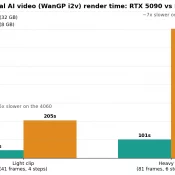
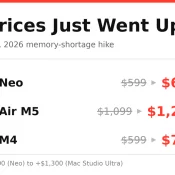
MacBook Neo Deep Dive: Benchmarks, Wafer Economics, and the 8GB Gamble

Preface: I’m not really a Mac guy. But I have deep respect for what Apple has done with their silicon, and I’ve been following their CPU journey since the Motorola 68k days through PowerPC, the Intel transition, and now their in-house Apple Silicon. What they’ve accomplished in the last five years is genuinely remarkable. Apple is one of the few original tech companies that has survived and thrived over the decades while still staying in the consumer tech space. As

Quicken Categorizing Downloaded Transactions Incorrectly? Here’s the Real Fix.

TL;DR: Quicken’s auto-categorization guesses categories based on payee names and often gets them wrong. The fix: disable auto-categorization in Preferences, then set up Renaming Rules and Memorized Payee List entries so Quicken categorizes based on your explicit rules instead of its own guessing. Takes about 60 seconds per vendor. The Problem If you use Quicken Classic for Windows to manage your finances, you’ve probably run into this: you download transactions from your bank, and Quicken helpfully assigns categories to them.

Carbon Monoxide Detector Still Beeping After Replacing Batteries? (It’s Not the Battery!)

TL;DR: If your carbon monoxide detector keeps beeping after you replaced the batteries, it’s probably not a battery issue at all. Most CO detectors have a 10-year end-of-life timer built into the unit. Once it expires, no amount of fresh batteries will stop the beeping. The only fix is to replace the entire unit. Here’s how to tell the difference and what to buy next. What Happened My Kidde carbon monoxide detector started chirping. Two quick beeps every 30 seconds

MCP Server Token Costs in Claude Code: Full Breakdown

TL;DR: Every MCP server you connect to Claude Code silently costs tokens on every single message, even when idle. A typical 4-server setup runs about 7,000 tokens of overhead. Heavy setups with 5+ servers can burn 50,000+ tokens before you type your first prompt. Here’s the exact cost of every tool across four common MCP servers. Why MCP Servers Cost Tokens MCP (Model Context Protocol) servers let Claude Code interact with external tools: browse the web, query databases, send emails,

Claude Code /context Command: See Exactly Where Your Tokens Go

TL;DR: Type /context in Claude Code to see a full breakdown of where your context window tokens are being spent. It shows system overhead, MCP tools, memory files, conversation history, and free space. Use it to find bloated MCP servers, oversized CLAUDE.md files, and know when to run /compact. What Is /context? If you’ve ever had a Claude Code session start strong and then slowly degrade, the context window is probably the reason. Every message you send carries invisible overhead:

Claude Reached Its Tool-Use Limit for This Turn: What It Means and How to Fix It

TL;DR: This message means Claude hit its per-turn cap on tool calls (around 10-20 actions like web searches, file reads, or connected service requests). Click “Continue” and it picks up right where it left off. No work is lost. 👍 What Does “Claude Reached Its Tool-Use Limit” Mean? If you use Claude with any connected tools (Gmail, Google Drive, web search, MCP servers, code execution, etc.) you may have seen this banner pop up mid-conversation: “Claude reached its tool-use limit

Welcome to the ride!

Guest Post by Jack

Hello! I will be putting up a website for guns, games, dirtbikes, and all sorts of other cool stuff! It is not up yet but it will be up within a few days. I am very excited because I will be able to share my knowledge and hopefully help people learn more about their stuff. The website’s name is jackhodges.com Please drop ideas on what you want to see on my website in the comments!

Claude Session Handoffs: How to Keep Context Across Conversations

TLDR: AI conversations have a pretty definite length limit as of 2026 and a limited shelf life. When context fills up or you start a new session, everything the AI learned about your project may be gone. ⭐ A simple two-file system (a permanent reference doc and a living session log) plus a handoff prompt takes a few seconds at the end of a session and saves minutes of re-explanation (and potentially wasted context) at the start of the next

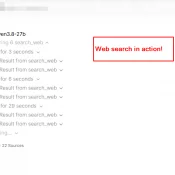
I Tested 13 Local LLMs on Tool Calling: March 2026

I built a deterministic eval harness and tested 13 local LLMs on tool calling (function calling) to find out which models work decently well for agentic tasks. The result that surprised me most: a 3.4 GB model scored higher than everything else I tested, including models five times its size. If you’re running a local AI stack with Open WebUI, LM Studio, or any OpenAI-compatible frontend, tool calling is one of the key features that enables agentic behavior. It lets

« Older Entries